


Stephen King & Me: Neighbors in a Scary World
When I was a kid growing up in the 1970’s there was no question who haunted my dreams: Stephen King. He was a neighbor of a sort: I spent most of the year living with my mom in rural Maine, not pretty-coastal-sailboat Maine but poor-inland-factory Maine. King lived north of me by a half hour, but considering the size of the state and the fact that he too came from the Maine not on postcards, this seemed to fall easily within the neighborly category.
I was a good Seventh-day Adventist boy, who once burned a KISS poster in a bonfire, the flames of which were literally stoked by a schoolteacher. I didn’t play with guns and I was by nature more kiss-kiss than bang-bang. So on some levels it made no sense that I was hooked on King’s eerie, sometimes supernatural, always disturbing novels. But I was also a default storyteller: whether it was testimony at camp-meeting or making people laugh (say, by recounting the time a classmate’s mother walked into school to find a boa constrictor wrapped around my neck), I couldn’t resist the lure of a tale and having someone to tell it to.
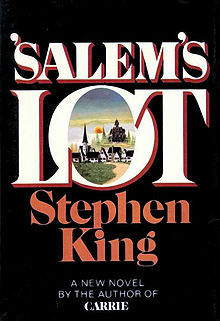
Salem’s Lot was my entry point for scary books and let me tell you: if you live in a New England house with a dank earthen cellar, there is very little you want to do less than to go down those old wooden steps in the dark after reading Salem’s Lot. I was at once repulsed by the horrors in the book and thrilled by the way the plot kept turning. Reading Stephen King as a tween was for me the equivalent of driving by a car crash: look, don’t look, LOOK.
Eventually, I grew up to be a writer, seeing my plays produced, penning columns for news outlets, and publishing three books. My agent once described my brand as “smart uplift,” kind of Upworthy before Upworthy. That made sense: it pretty much fit who I tried to be as a person.
So how did I end up writing a novel about three teenagers who seize the chance to kill people? How did someone once sure that "backwards masking" was the work of Satan become a guy writing about a supernatural Fury egging on murder?
It wasn’t the outgrowth of some dark cellar of the soul, no sad clown on the inside trying to reveal his pain. It was simple: a story grabbed me and, the older I got, life gave me more reasons to tell it.
It started 17 years ago with the movie Final Destination. Its premise was simple: these kids were destined to die. It was a hooky concept but a little thin—the tension was clear, but what was the take-away from picking off the characters one by one? I found myself thinking it would be a richer story on the flip side: What if the kids were destined not to die, but to kill? That would be a whole lot thornier, opening a bigger window into human morality and what people are capable of under duress.
That idea got filed away in the mental rolodex where so many inspirations go and remained there until after September 11. In a changed world, suddenly a lot of ordinary, good-hearted people were advocating bombing other countries and torturing their citizens. How quickly anger, grief, and fear—all feelings which were justified—translated into action that yielded more of the same, but now for others. In those three emotions, I recognized the combustible chemistry that fueled so much dark history.
That’s when I knew what Revengers meant, why it seemed a story worth telling. I began writing it as a movie, one of those raw scripts by someone who doesn’t know his ass from his elbow when it comes to screenwriting. And then it sat in a drawer (literally, a physical drawer, because this was 2004 and I hadn’t yet discovered the cloud). But over the years, I kept thinking about the characters and whether they would or should be able to get vengeance on behalf of their loves ones. (You know you’re a writer when you argue in your head with people you made up.)
In 2006, I found myself caught up in a series of events that included a young vigilante killing sex offenders and then taking his own life just two feet away from me. Real horror was not distant; it was blood I had to shower off. While I tried to wrestle with my own trauma, I pondered what that young man had thought he could achieve, what moral equation he’d worked out before setting off on his spree. I spent years trying to understand the lessons of that night.
That experience illuminated for me the fourth element of the cocktail that spawns so much violence: righteousness. The biggest battles are not for shallow reasons; the greatest bloodshed comes not from avarice but belief. The shooter in my real-life story wasn’t amoral—he just had a moral compass that pointed him down a path most of us would reject.
In 2012, when I turned Revengers into a novel, my characters’ questions were my shooter’s questions and America’s questions: How much does the cycle of violence cost you? How much does the desire to right a wrong override old values? How do you know what is right and wrong amid conflicting information? I kept flashing back to my junior year English class, when we were wading into the age-old literary conflict of justice versus mercy. The themes I was exploring were as old as writing itself.
I’ve always had a missionary side—whatever I think is of value, I have to share. But I had no interest in writing a tract. I really wanted to tell a good story, one that readers could gobble up, one which would be tangled and surprising, with the philosophy seeping in simply because it was in my heart as I wrote. I tried to get my Stephen King on: committing to the characters’ nightmares and the terror of their specific situation, letting their choices, good and bad, lead the way.
Where I struck out on my own path was in deciding who those characters would be. I had no interest in replicating the familiar faces filling the shelves of Mr. Paperback in the late 1970’s when I read Salem’s Lot or in the 80’s I was in high school English. I am a gay Cuban-American dad to a daughter of African-American descent, and I know too well how rarely people like us are ever the leads in popular fiction (or tv shows or movies), especially when the subject is not about otherness. I knew I could change that.

My daughter is part Katniss, part Star Butterfly, and part Zendaya. I wanted a heroine like her: a strong, sensitive girl of color, sometimes making good decisions and sometimes not. I wanted to be in the book too, so I created a gay kid from New England who is prone to emotion and big gestures. I rounded out their trio with a Chinese-American kid who has a hot temper and not a violin in sight. These characters weren’t in the books I read growing up; now they’re in mine.
When the book was finished, what happened next was what happens to most new books: they languish in the ether of submissions. Being a fiction unknown, it was several years before I caught the eye of a small publisher, and another year before the book came out. And then the universe took me right back to my childhood.
One week after the book debuted, it became an Amazon Best-Seller in its category. And which author sat right next to me on the list? Stephen King.
For a thrilling moment, we were neighbors once again.


Comments